
When Role-Playing is More Than A Game
Tabletop role-playing games give kids a creative space to connect, collaborate, and discover confidence through shared storytelling.
Led by a licensed therapist, this group explores meaningful adventures inspired by games like Dungeons & Dragons™.
What Is a Tabletop Role-Playing Game (TTRPG)?
A tabletop role-playing game (TTRPG) is a cooperative storytelling game where kids create characters and go on adventures together. Players work as a team to solve problems, overcome obstacles, and shape the story through the choices they make.
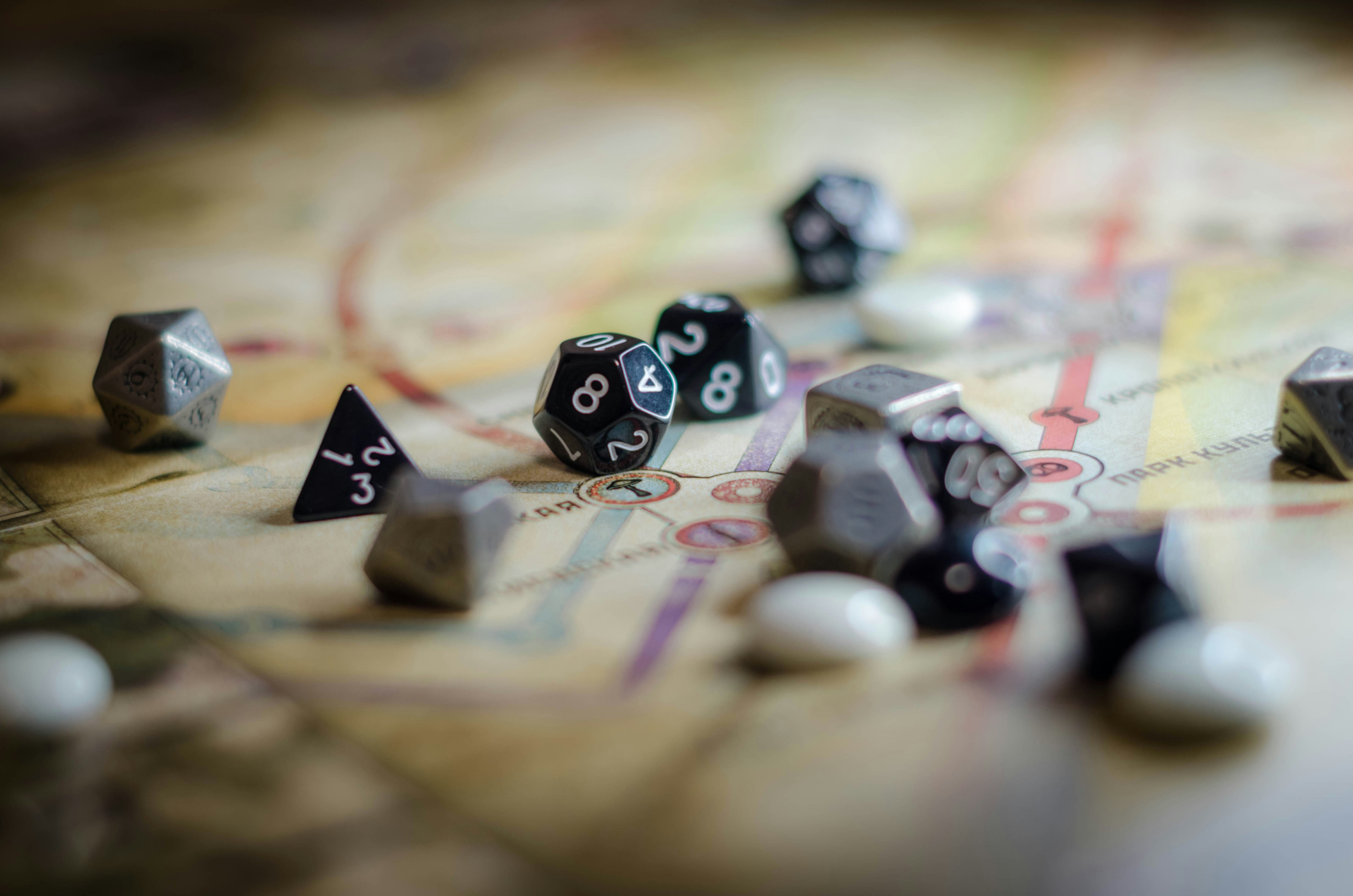
Unlike video games, TTRPGs happen face-to-face through conversation, imagination, and collaboration. Kids use dice, maps, miniatures, music, and storytelling to bring the world to life.
These stories can take place in almost any kind of world. Some adventures are fantasy stories inspired by knights and dragons, while others might involve superheroes, magical animals, mystery solving, space exploration, or entirely original worlds created by the group.
The best-known role-playing game is Dungeons & Dragons, but there are now countless role-playing games designed for different ages, interests, and play styles.
Why Do We Use Dice?
Dice help determine what happens during the story. Sometimes characters succeed in exciting ways, and sometimes things do not go according to plan.
That uncertainty is part of what makes the game meaningful. Kids experience the excitement of taking risks, the pride of overcoming challenges, and the frustration of setbacks in a safe and supportive environment.
When something unexpected happens, players have to adapt. They may rethink their plan, ask for help, try a creative solution, or encourage a teammate. Over time, these moments naturally build flexibility, resilience, problem-solving skills, and frustration tolerance.
Because the stakes are fictional, kids can safely practice recovering from mistakes and trying again.
What Does a Session Look Like?
In a therapeutic role-playing group, the therapist serves as the Game Master. The Game Master describes the world, introduces challenges and characters, and guides the story forward while helping the group work together.
The players create characters with their own personalities, strengths, fears, goals, and abilities. In therapy, these characters are developed collaboratively with the therapist and can become a safe way to explore challenges like speaking up, handling conflict, asking for help, coping with mistakes, or figuring out how to respond to difficult situations.
The group forms an adventuring party that works together to complete quests and navigate the story as a team. Sessions are usually part of an ongoing adventure, so each week the group picks up where they left off the previous session.
During the game, players are constantly making decisions together. A group may encounter a frightened dragon blocking a bridge. One child wants to fight it. Another wants to negotiate. A third asks more questions and notices clues that the dragon is injured and scared.
As the group discusses what to do, kids practice listening to one another, expressing their ideas, managing disagreement, and adapting to new information. The story creates natural opportunities for collaboration, emotional regulation, perspective-taking, and flexible thinking.
Because the game feels playful and imaginative, kids are often more willing to take social and emotional risks than they would in everyday life.
Why Role-Playing Games Help Kids Grow
Kids naturally use play to understand themselves and the world around them. Role-playing games build on this by creating a structured social environment where children can safely experiment with new ways of thinking, communicating, and responding to challenges.
As a spoken and collaborative game, TTRPGs encourage kids to explain their ideas, ask questions, advocate for themselves, and work through problems with others. Over time, this can strengthen communication skills, confidence, and self-awareness.
The game also creates emotional distance that can make difficult situations feel safer to explore. Trying something new as a character often feels less overwhelming than trying it in real life. If a character makes a mistake, fails a challenge, or says the wrong thing, kids have an opportunity to reflect, adapt, and try again without the same fear of real-world consequences.
Playing a heroic character and contributing meaningfully to the group can also strengthen a child’s sense that their ideas matter and that they are capable of helping others.
Therapeutic role-playing games have increasingly been recognized by clinicians and researchers as a powerful tool for supporting communication, emotional regulation, coping skills, and social growth.
Why TTRPGs Can Be Especially Helpful for Neurodivergent Kids
Therapeutic role-playing games can provide a supportive space for neurodivergent kids to practice flexibility, collaboration, emotional regulation, and noticing how teammates are feeling and responding.
Because stories are unpredictable, players regularly encounter moments where plans change or things do not go as expected. Instead of shutting down after frustration or disappointment, kids are encouraged to respond creatively, adapt, and keep moving forward with the support of the group.
The structure of the game also creates repeated opportunities to practice turn-taking, thinking through choices before acting, perspective-taking, and collaborative problem-solving.
Many neurodivergent kids also find role-playing games engaging because they combine creativity, imagination, clear rules, and collaborative problem-solving in a way that feels motivating rather than forced.
What Therapeutic Role-Playing Games Are Not
These groups are not video games, and kids do not need prior experience with fantasy games to participate.
The focus is not on “winning,” acting ability, or memorizing rules. The goal is collaborative storytelling, problem-solving, communication, and social-emotional growth in a supportive environment.
Moments From the Table
A Brief History of Role-Playing Games
Modern tabletop role-playing games began in 1974 with the release of Dungeons & Dragons. Since then, role-playing games have expanded into countless genres and storytelling styles for players of all ages.
Today, role-playing games can tell almost any kind of story imaginable, from fantasy adventures and mysteries to science fiction, superhero stories, magical animal adventures, and emotionally grounded slice-of-life stories.
Although role-playing games were sometimes misunderstood during the moral panics of the 1980s, they are now widely recognized as a creative and collaborative form of storytelling and play. Modern TTRPG groups are commonly used in schools, libraries, community programs, and therapeutic settings to support social connection, creativity, and emotional growth.
Let's talk
Book a free 15-minute consult.
Tell me a little about yourself and what's bringing you here. I'll reply within one business day to schedule a call.
Denver, CO 80209 (720) 407-4666